

By: GOLD MINERS CLUB
Introduction: The Year Gold Rewrote the Rules
In early 2026, gold did something it hadn’t done in nearly half a century. Beginning in January, it shattered every price record and fundamentally altered the global financial landscape. The yellow metal surged past $5,600 per ounce before settling into a volatile trading range between $4,200 and $5,000. Investors, central bankers, and geopolitical strategists scrambled to understand these rapid developments.
However, the story of ‘The Great Gold War 2026’ is about more than price: the surge triggered a structural realignment of the international monetary system. As dollar dominance weakens, gold has reclaimed its role as the primary reserve asset. For the first time in three decades, central banks hold more gold than U.S. Treasury securities, prompting many to refer to this change as the ‘death of risk-free hegemony.’
This article now turns to explore the three primary forces that drove gold to historic highs, the paradoxical crash that followed, and what the future holds for the world’s oldest form of money.
Part I: The Perfect Storm – Three Forces Driving Gold to $5,600
1. The Central Bank “Great Bullion Pivot.”
The most significant driver of gold’s 2026 surge was not speculative trading or retail panic—it was deliberate, strategic accumulation by the world’s central banks. A report from the World Gold Council shows that 95% of surveyed central banks expect global central bank gold reserves to increase over the next 12 months, and 43% expect to add to their own reserves during that period.
China was not alone. Poland targeted a 700-tonne reserve. Southeast Asian nations, including Malaysia and Indonesia, re-entered the market, as did African nations such as Uganda and Kenya through domestic gold-buying programs.
What explains this coordinated pivot following the 2022 Western freeze on Russian sovereign assets? That event revealed to central banks that holding foreign fiat currency exposed them to ‘counterparty risk,’ or the danger that another party could restrict access. In response, they chose to increase physical gold reserves, which cannot be frozen, sanctioned, or restricted if stored domestically. banks are effectively “unplugging from the Western financial grid.”
2. Geopolitical Siege: The Iran Conflict and the Strait of Hormuz:
On February 28, 2026, the geopolitical landscape shifted significantly when the U.S. military launched a major rescue mission involving about 176 aircraft and hundreds of personnel to recover the crew of a downed F-15E Strike Eagle deep inside Iran, according to a report from Axios. A U.S.-Israeli strike on Iran’s nuclear program ignited a full regional crisis. In the immediate aftermath, the Strait of Hormuz was closed, sending Brent crude soaring above $120 per barrel and reigniting inflation fears many thought were over in 2024.
The Strait of Hormuz carries 20% of the world’s oil and liquefied natural gas. Its closure sent Brent crude soaring above $120 per barrel, reigniting inflation fears many thought were over in 2024. Gold responded as expected, spiking above $5,400 per ounce as panic gripped markets.
Academic research supports this connection. A study published in the Pacific-Basin Finance Journal (February 2026) constructed a U.S.-China Tension Index and found that geopolitical tensions have a significant positive influence on gold’s long-term volatility, with escalations in tension amplifying market uncertainty and driving investors toward safe havens.
3. Institutional Reallocation and Chinese Retail Demand:
The third pillar of gold’s rally came from Western institutional investors and Chinese retail demand. State Street Investment Management noted in February 2026 that gold benefited from ‘ETF re-stocking and gold reallocation cycles. According to BlackRock, gold’s role in investment portfolios is evolving, now being highlighted as a portfolio differentiator and as a real asset that helps protect purchasing power. In China, UBS Group has observed widespread optimism that gold prices will rise over the medium- to long-term. The firm identified three main drivers: tax rule adjustments favoring investment gold over jewelry gold; bank accumulation programs expanding retail access; and insurance companies beginning. From late February to March 2026, as Middle East tensions peaked, gold fell 27% from its January highs, dropping below $4,500 per ounce. calculated :
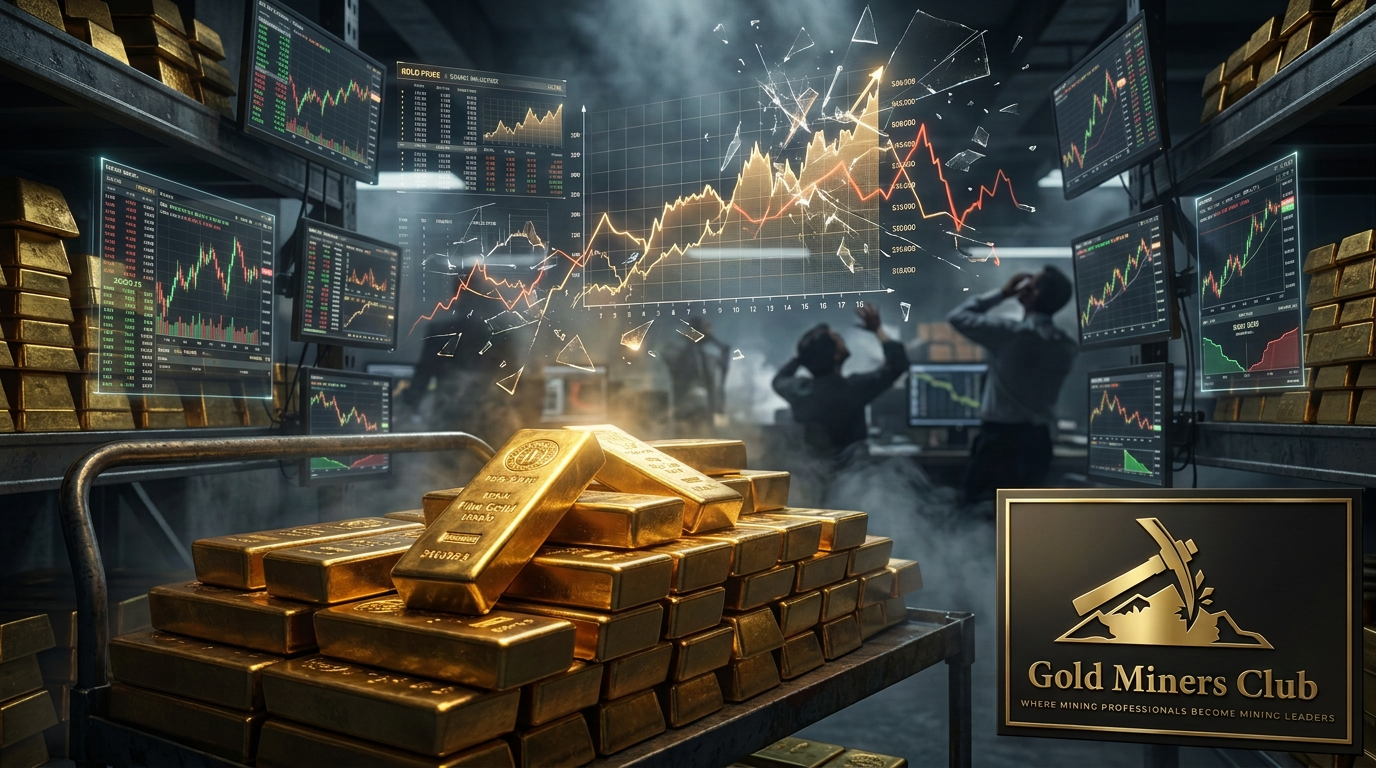
Then, as the gold rally seemed unstoppable, something changed. From late February to March 2026, as Middle East tensions peaked, gold fell 27% from its January highs, dropping below $4,500 per ounce. Bloomberg analyst Katie Greifeld called it “the worst losing streak in recent memory.”
This “Geopolitical Paradox” defiThis ‘Geopolitical Paradox’—where conflict drove gold sharply down—defied expectations. To understand why, one must consider how market structure and institutional liquidation processes interact during such crises.n:
When a sudden geopolitical shock hits, large institutional investors don’t start by repositioning strategically. Assets that rose the most before the crisis get hit hardest in the selloff. According to research published in the Journal of Financial Markets, periods of large losses and high market volatility, such as the 2008–2009 subprime mortgage crisis, can prompt fund managers to make widespread portfolio sell-offs across investments to quickly raise cash.
According to the World Gold Council, total annual gold investment more than doubled in 2025 to reach $240 billion, making gold one of the most crowded trades that year. As margin calls swept through the market, institutions often sold their most profitable assets, and gold topped that list. Fed’s “Higher-for-Longer” Bind:
Compounding the selling pressure was the Federal Reserve’s policy response to the energy shock. Oil prices above $100 per barrel drove a new wave of inflation. The Fed held interest rates steady at 3.5%–3.75% in March 2026. Chair Jerome Powell signaled that the ‘energy-driven inflation tax’ required a delay in any planned cuts.
As U.S. 10-year Treasury yields climbed toward 4.22%, the appeal of non-yielding gold dropped as the opportunity cost rose. According to Dollarcontext, changes in monetary policy expectations and global capital flows have made the U.S. Dollar Index (DXY) highly volatile in early 2026, highlighting the dollar’s ongoing role as a key indicator of investor sentiment in uncertain times. When conflict creates supply-side inflation shocks, the resulting hawkishness from the Federal Reserve can actually suppress the very assets that usually benefit from chaos.
Part II: The Future – Three Scenarios for Gold in a Multi-Polar World
Scenario 1: The “Higher Floor” (Base Case)
The most likely outcome, according to major financial institutions, is that gold has permanently rebased to a higher price range. State Street Investment Management argued in February 2026 that ‘gold clearing $6,000/oz is more probable than a dip below $4,000/oz over the next 6-12 months.’ The firm cited structural tailwinds, including rising global debt levels, FX debasement fears, and continued central bank demand.
Even after the March correction, analysts say the metal now has a soft floor between $4,000 and $4,500 per ounce. Ongoing gold accumulation by central banks supports this view. As of April 2026, annual official-sector demand remained near 850-1,000 tonnes—almost double the 2010–2021 baseline of 450 tonnes.
Scenario 2: The “Peace Dividend” Correction (Bear Case)
The most significant downside risk is what analysts call the ‘Peace Dividend’—a rapid de-escalation of global conflicts that erodes gold’s fear premium. Specific triggers could include a negotiated ceasefire in Eastern Europe, normalization of shipping lanes through the Strait of Hormuz, or a U.S.-China trade detente.
In this scenario, the geopolitical risk premium embedded in gold prices could unwind quickly. This may drive prices down 20-25% toward $3,500–$4,000 per ounce. According to State Street Investment Management, currency investing demands a robust approach that considers fair value, macroeconomic factors, and long-term strategy to manage potential risks, including scenarios that could affect the strength of the US dollar.
Scenario 3: The “Black Swan” Spike (Bull Case)
The upside scenario is dramatic. If the Iran conflict escalates, drawing in more regional powers or causing a systemic credit event, the Federal Reserve might be forced to pivot and cut rates despite high inflation. In such a ‘black swan’ scenario, the dollar could lose its appeal as a liquidity haven. Gold could then see a secondary spike toward $6,000–$7,000 per ounce.
Goldman Sachs has reportedly set a year-end target of $5,400 per ounce in this scenario, while State Street sees $6,000 as more probable than a drop below $4,000.
Part III: Strategic Implications – What the Great Gold War Means for Investors
The End of the 60/40 Portfolio
The traditional 60/40 portfolio is no longer sufficient amid high stock-bond correlations and persistent inflation. BlackRock now advises a barbell strategy, pairing gold with private credit to hedge expensive equities.
According to Kiplinger, exchange-traded products such as SPDR Gold Shares (GLD) remain popular among retail investors seeking exposure to gold, while iShares Silver Trust (SLV) offers similar benefits for those interested in silver. These ETFs are known for their high liquidity and direct physical backing, making them appealing options for accessing precious metals markets. The mining sector has major mining companies, though the benefits are unevenly distributed. Franco-Nevada, a royalty and streaming company, achieved record quarterly results in 2025, driven by higher gold prices, strong operations, new acquisitions, and the sale of Cobre Panama copper concentrate stockpiles, according to a report from Franco-Nevada Corporation. pressures on fuel and labor. Mid-tier miners like Agnico Eagle have emerged as favorites among institutional investors, thanks to their high-grade assets and operational discipline.
The De-Dollarization Trend
Perhaps the most profound implication of the Great Gold War is what it signals about the future of the U.S. dollar as the world’s reserve currency. The “weaponization” of the dollar—most clearly seen in the freezing of Russian assets—has taught central banks that holding fiat in foreign accounts is a liability in a fragmented geopolitical landscape.
Several nations are currently discussing the creation of gold-backed digital currencies to facilitate trade within the BRICS+ bloc, bypassing SWIFT entirely. This development represents a direct challenge to the dollar-dominated global trade architecture and could lead to a permanent bifurcated market: one based on credit and Western fiat currencies, and another on hard assets and sovereign bullion.
Conclusion: A New Monetary Frontier
The Great Gold War of 2026 is not the end of the story—it is the beginning of a new chapter in monetary history. Gold has moved from the periphery of the financial system back to its very center, serving as a hedge against both geopolitical conflict and currency debasement.
The key takeaway for investors and policymakers is this: the structural case for gold has changed. This is not a speculative bubble driven by retail frenzy. It is a coordinated, strategic reallocation by the world’s most sophisticated monetary authorities—central banks that have spent decades managing currency risk.
As State Street Investment Management concluded in its February 2026 analysis: “Gold is no longer just a crisis hedge; it has reclaimed its role as a foundational reserve asset.”
Whether gold reaches $6,000 or falls back to $4,000 in the coming months depends on the interplay of geopolitics, Federal Reserve policy, and the pace of de-dollarization. But one thing is certain: the world has entered a new monetary era, and gold is at its center.
References:
- “Weekly Market Recap (March 27) – Why Gold Fell as War Escalated?” NAI500, March 27, 2026.
- “The Great Bullion Pivot: Global Central Banks Abandon Fiat as 2026 Gold Rush Intensifies.” Wedbush Securities, March 18, 2026.
- “UBS Group: Gold demand from China will continue.” Futu News, April 7, 2026.
- Liu, Yang and Li, Shun. “Beyond market stress: Incremental long-term information in geopolitical tension for gold volatility.” Pacific-Basin Finance Journal, Vol. 96, February 2026.
- “The Geopolitical Paradox: Why Gold and Silver are Crashing as the Middle East Ignites.” Wedbush Securities, March 19, 2026.
- “The Golden Pivot: Central Banks Cement Structural Shift in Global Reserves Amid 2026 Inflation Surge.” Wedbush Securities, April 2, 2026.
- “The Golden Rollercoaster: Wall Street Braces as Gold Hits $4,380 and Silver Targets a Critical $76 Breakout.” Wedbush Securities, April 6, 2026.
- “When Will Gold’s Price Go Down? The ‘Peace Dividend’ and 3 Bearish Reversal Signals.” MEXC Learn, March 23, 2026.
- “The $5,000 Ounce: Gold Eclipses US Treasuries Amid Geopolitical Siege.” Wedbush Securities, March 10, 2026.
- Doshi, Aakash. “Gold takes center stage.” State Street Investment Management, February 13, 2026.