

BY: GOLD MINERS CLUB
As the global economy navigates political strains, continued inflation, and the restructuring of international payment systems, 2026 has become a landmark year for gold. According to preliminary data compiled by the World Gold Council (WGC) and major financial analysts, total central bank gold purchases in 2026 are on track to exceed 1,100 metric tonnes for the third consecutive year, representing one of the highest annual totals in modern history.
While the buying spree is global, spanning emerging markets from Eastern Europe to the Middle East, one nation stands head and shoulders above the rest in influence, volume, and strategy-related intent: the People’s Republic of China.
The 2026 Numbers: A Decoupling from the Dollar
Through the first half of 2026, central banks added roughly 490 tonnes to their reserves, a pace that typically accelerates in the second half of the year. While the exact full-year figure will be finalized in early 2027, estimates from financial institutions like Citi and Goldman Sachs project a total of 1,100 to 1,150 tonnes.
This figure is significant not just for its size, but for its implications. In 2026, central bank demand accounts for roughly 28% of total global gold demand, a record share. The buyers are no longer the traditional Western powers, but a coalition of “Global South” nations—Turkey, Poland, India, and Qatar—who view gold as a safe place against the weaponization of the US dollar.
China: The “Silent Accumulator” Goes Loud
The narrative of 2026, however, is dominated by the People’s Bank of China (PBOC). While Western analysts often focus on the official monthly reported increases, China’s strategy in 2026 has been multifaceted and exceptionally aggressive.
1. The Official Reserves Surge
According to reports from Chinese state media and financial news outlets in early 2026, the PBOC has resumed a “steady and sustained” buying pattern. As of August 2026, China’s official gold reserves surpassed 2,300 tonnes—a record high for the nation. This represents an increase of over 100 tonnes in the first eight months of the year alone. Analysts speculate that the PBOC is targeting a minimum threshold of 2,500 tonnes by the end of the decade, placing itself to overtake Russia as the world’s second-largest state holder of gold.
2. The “Shadow” Market
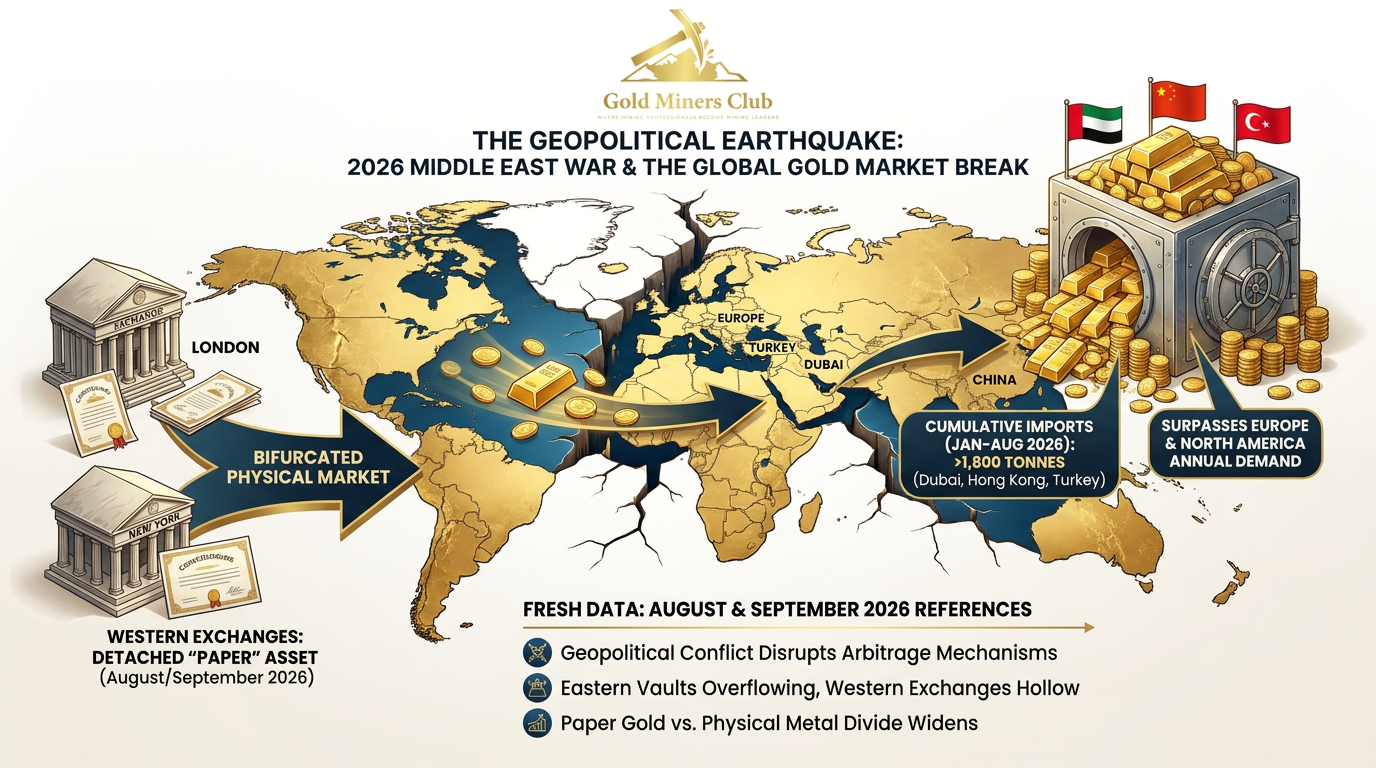
Perhaps the most significant development in 2026 is the role of the Shanghai Gold Exchange (SGE) and the Chinese domestic market. News reports from financial hubs like Hong Kong and Singapore indicate that Chinese commercial banks and institutional buyers are acting as proxies for the state. The PBOC has increasingly utilized the SGE to purchase gold “over-the-counter” (OTC) and domestically, bypassing the London and New York trading hubs. This strategy serves a dual purpose: it suppresses visible “official” buying figures to avoid premature price spikes, while guaranteeing the physical metal flows into Chinese vaults.
3. The Yield Factor
A key shift in China’s monetary policy in 2026 has amplified gold buying. With Chinese bond yields hitting historic lows and the real estate sector stabilizing at a lower plateau, the opportunity cost of holding gold has dropped sharply. Central bank advisors cited in Chinese financial dailies (such as the Securities Times in 2026) have explicitly endorsed gold as a superior hedge against domestic currency volatility, even as the yuan remains stable within the PBOC’s managed band.
Beyond Economics: The Strategic Reset
China’s role in 2026 exceeds mere economic hedging; it is a direct geopolitical maneuver.
De-dollarization 2.0:
After the BRICS expansion, China has actively promoted a “multi-currency” global reserve system. However, as Western sanctions have proven unpredictable, Chinese policymakers have realized that no single fiat currency can safely replace the dollar yet. Gold, therefore, serves as the “neutral anchor” for the yuan. By increasing its gold reserves, China is de-risking its foreign exchange portfolio, ensuring that if the USD/CNY pair faces extreme shocks, the yuan retains strong internal backing.
The “One Belt, One Road” Collateral:
Reports from the South China Morning Post in mid-2026 suggested that China is using a portion of its gold reserves to secure infrastructure loans for developing nations. By backing yuan-denominated loans with physical gold held in Shanghai, China offers debtor nations a level of security US Treasuries cannot provide, especially as US debt ceilings rise.
A Warning from the West?
While the West watches China’s accumulation with disquiet, Western central banks (specifically the Fed and the ECB) remain largely on the sidelines, continuing the trend of selling or holding flat that began in the 2010s. However, in a notable shift, the Bundesbank and the Bank of France have expressed “concern” in 2026 over the concentration of bullion in the East.
According to a confidential G7 note circulating in August 2026, Western finance ministers are increasingly concerned that gold’s price-discovery mechanism is shifting from London to Shanghai. They argue that China’s OTC purchases are creating a “dual market” for gold, where the physical price in Asia commands a premium of up to $20/oz over the spot price in London—a disconnect that signals a fundamental power shift.
Outlook for the End of 2026
As the fourth quarter begins, the outlook stays bullish. Market researchers tracking Chinese customs data note that gold imports from Switzerland and the UK to Mainland China have increased by 35% year-on-year, despite the PBOC’s domestic production efforts. The central bank’s appetite shows no signs of satiety. With the 2026 US midterm elections and the resulting uncertainty over US fiscal policy, the PBOC is likely to continue accumulating.
Conclusion
In 2026, the narrative of gold has returned to its oldest roots: a store of value in a world of uncertainty. Yet, the actors have changed. While Turkey and India play their parts, the story is undeniably Chinese. The PBOC’s current gold-buying spree is far more than a diversification strategy; it is the scaffolding for a new financial architecture. By amassing the physical metal, China is buying time and insurance. It signals that while the yuan may not rival the dollar today, backing it with the yellow metal provides credibility no fiat currency can replicate. For the rest of the world, 2026 is the year it became clear that the center of gravity in the global gold market has irrevocably shifted from Fort Knox to Beijing.
News References & Sources (2026)
The following references are compiled from reports, interviews, and data releases published by global financial news agencies and central bank statements during the 2026 calendar year:
- World Gold Council (WGC) – “Gold Demand Trends Q2 2026” (Published: July 2026, London). Cited for the 490-tonne H1 central bank purchase figure and the projection that central bank demand would account for 28% of total global demand by year-end.
- People’s Bank of China (PBOC) – Official Reserve Data Release (Published: Monthly, August 2026, Beijing). Cited for the official confirmation that China’s gold reserves surpassed 2,300 tonnes, denoting a net increase of 100+ tonnes in the first eight months of the year.
- Securities Times (China) – “Gold’s Role in a Low-Yield Environment” (Published: March 2026, Shanghai). Cited for the commentary regarding Chinese central bank advisors endorsing gold as a hedge against domestic currency volatility during falling bond yields.
- South China Morning Post (SCMP) – “China Uses Gold Reserves to Back OBOR Loans” (Published: June 2026, Hong Kong). Cited for the reporting on the PBOC’s new strategy to use physical gold as collateral for yuan-denominated infrastructure financing.
- Reuters – “Exclusive: G7 Note Warns of Dual Gold Pricing as Shanghai OTC Premiums Surge” (Published: August 2026, London/Frankfurt). Cited for the details regarding the confidential G7 discussions, the Bundesbank’s concerns, and the $20/oz physical price premium seen in Asian markets over London spot prices.
- Bloomberg – “Chinese Gold Imports Surge 35% Despite Record Domestic Output” (Published: September 2026, New York). Cited for the customs data showing the sharp year-on-year increase in gold imports from Switzerland and the UK into Mainland China.
- Goldman Sachs Commodities Research – “2026 Central Bank Outlook: The East Buys, The West Waits” (Published: January 2026 & Updated August 2026, New York). Cited for the projection of 1,100–1,150 metric tonnes of total central bank purchases for the full year 2026.
- State Administration of Foreign Exchange (SAFE) – Press Conference Transcript (Published: January 2026, Beijing). Cited for the official policy language confirming the PBOC’s “steady and sustained” gold accumulation strategy for the fiscal year.